Meta Description
Ashok Leyland reported a 3% decline in domestic vehicle sales in May 2026 with total dispatches falling to 14148 units. Here is what impacted the commercial vehicle giant.
Introduction
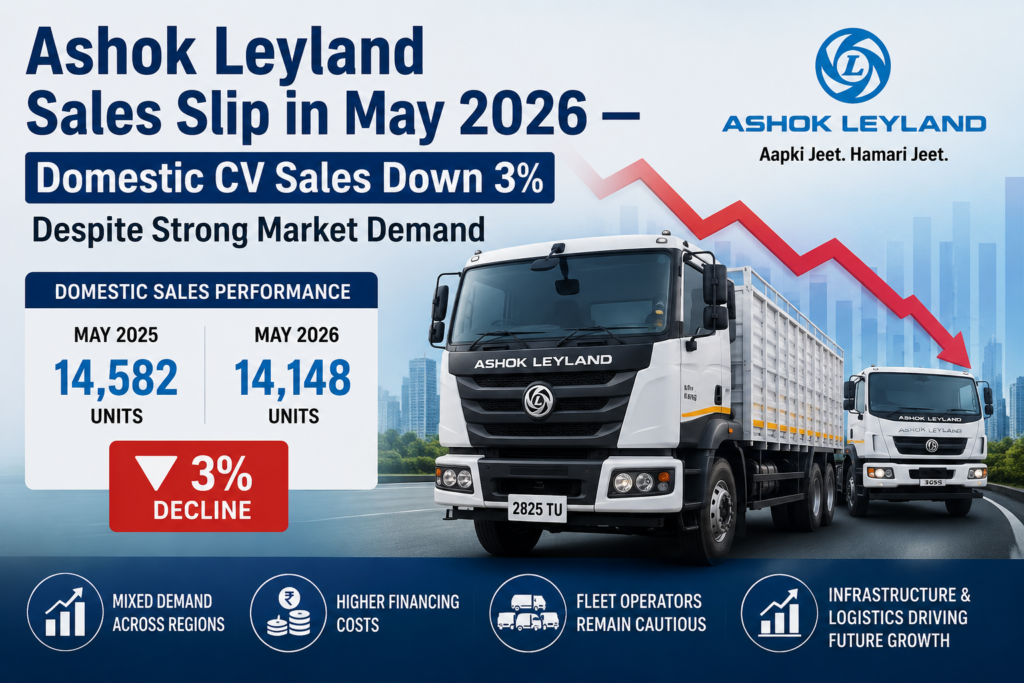
Ashok Leyland reported a 3 percent decline in domestic sales during May 2026 as the company sold 14148 units compared to 14582 units in the same month last year.
The decline comes at a time when India’s commercial vehicle market is experiencing mixed demand trends with some segments performing better than others.
May 2026 Sales Performance
Domestic Sales Overview
| Category | May 2026 | May 2025 | Change |
|---|---|---|---|
| Domestic Sales | 14148 Units | 14582 Units | Down 3% |
While the drop is relatively small it highlights ongoing challenges in the commercial vehicle sector.
Medium and Heavy Commercial Vehicle Segment
The company’s medium and heavy commercial vehicle business remained under pressure during the month.
Key Highlights
- Demand remained uneven across regions
- Infrastructure and construction activity continued to support some sales
- Fleet operators remained cautious about fresh purchases
- Financing costs continued to influence buying decisions
This segment remains a critical contributor to Ashok Leyland’s overall performance.
Light Commercial Vehicle Performance
The light commercial vehicle category showed mixed results.
Factors Affecting Demand
- Urban delivery demand remained stable
- E commerce logistics continued supporting sales
- Rising competition from rivals
- Buyers focused on fuel efficiency and ownership costs
The segment continues to play an important role in the company’s growth strategy.
What Caused the Sales Decline
Several factors likely contributed to the slowdown.
Main Reasons
- Seasonal demand fluctuations
- Delayed fleet replacement decisions
- Higher financing costs
- Regional market weakness in certain states
- Increased competition within the commercial vehicle industry
Despite these challenges the decline remained limited to just 3 percent.
Export Performance Remains Important
While domestic sales slowed exports continue to provide additional opportunities for growth.
Export Focus Areas
- Middle East markets
- African countries
- South Asian regions
- Emerging commercial vehicle markets
Ashok Leyland has been actively expanding its international presence.
Industry Outlook
The commercial vehicle industry remains optimistic about the coming months.
Growth Drivers
- Government infrastructure spending
- Expansion of logistics networks
- Economic growth and freight demand
- Replacement demand from fleet operators
Industry experts expect sales momentum to improve as economic activity strengthens.
Competition in the Market
Ashok Leyland continues to face strong competition from major players.
Key Rivals
- Tata Motors
- Eicher Motors
- Mahindra & Mahindra
Competition remains intense across both truck and bus segments.
What Investors Should Watch
Important Indicators
- Monthly sales recovery
- Fleet replacement demand
- Infrastructure project activity
- Export growth performance
- Commercial vehicle financing trends
These factors will likely determine Ashok Leyland’s performance during the rest of FY27.
Conclusion
Ashok Leyland’s domestic sales decline of 3 percent to 14148 units in May 2026 reflects the current challenges facing the commercial vehicle market. While demand remains uneven the company’s strong market position infrastructure driven opportunities and export growth plans could help support future recovery.
The decline is relatively modest and industry observers will be closely watching whether sales momentum improves in the coming months.
FAQ
How many vehicles did Ashok Leyland sell in May 2026?
Ashok Leyland reported domestic sales of 14148 units.
What was the year on year decline?
Domestic sales declined by 3 percent compared to May 2025.
Is the commercial vehicle market slowing down?
Demand remains mixed with some segments performing better than others.
Who are Ashok Leyland’s main competitors?
Major rivals include Tata Motors Eicher Motors and Mahindra.
Can sales recover in the coming months?
Industry experts expect infrastructure spending and freight demand to support future growth.