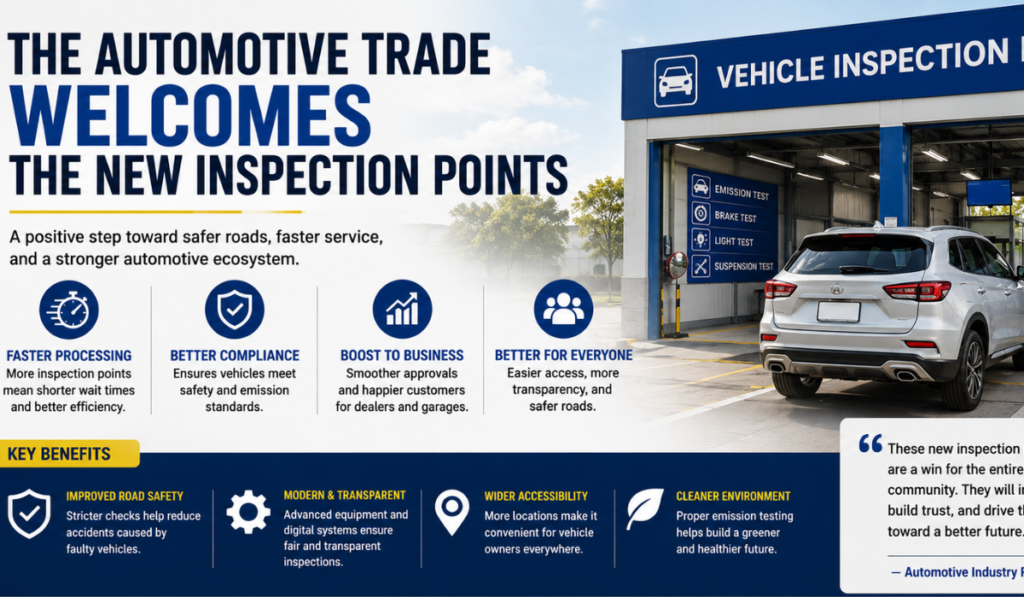
Automotive industry supports new vehicle inspection points, aiming to improve road safety, compliance, and transparency. Here’s what it means for drivers and dealers.
The automotive sector has responded positively to the introduction of new vehicle inspection points, calling it a major step toward improving road safety, compliance, and service efficiency. Industry experts believe this move could benefit not only regulators but also consumers and businesses.
What Are the New Inspection Points
The newly introduced inspection points are designed to expand vehicle testing and certification infrastructure across key regions.
Key Objectives
- Improve vehicle safety checks
- Reduce delays in inspection processes
- Increase accessibility for vehicle owners
- Ensure stricter compliance with regulations
These centers will handle everything from basic fitness checks to advanced safety inspections.
Why the Automotive Industry Supports This Move
1. Faster Processing
- Reduced waiting time for inspections
- More centers mean less congestion
- Improved efficiency for dealers and service providers
2. Better Compliance
- Ensures vehicles meet safety and emission standards
- Helps reduce illegal or unsafe vehicles on roads
- Encourages proper maintenance
3. Boost to Business
- Dealers and service centers benefit from smoother processes
- Faster approvals for new vehicles
- Increased customer satisfaction
This creates a more organized ecosystem.
Impact on Vehicle Owners
For regular drivers, the new inspection points bring several advantages.
Key Benefits
- Easier access to inspection facilities
- Shorter waiting periods
- More transparent processes
- Better assurance of vehicle safety
This could make routine checks less stressful and more convenient.
Impact on Road Safety
One of the biggest goals of this initiative is to improve safety standards.
Safety Improvements
- Stricter checks on brakes, emissions, and structure
- Early detection of mechanical issues
- Reduction in accidents caused by faulty vehicles
Over time, this could lead to safer roads for everyone.
Challenges to Watch
While the move is widely welcomed, some concerns remain.
Potential Issues
- Implementation consistency across regions
- Need for trained staff and proper equipment
- Possible increase in inspection costs
Proper execution will be key to success.
Industry Perspective
Automotive experts see this as a long-term positive step.
Key Viewpoints
- Modernization of inspection systems
- Alignment with global safety standards
- Better trust between consumers and regulators
It also supports the growing demand for structured automotive services.
Conclusion
The introduction of new vehicle inspection points is being seen as a progressive and necessary step by the automotive industry. By improving efficiency, safety, and accessibility, this initiative has the potential to transform how vehicle inspections are conducted.
If implemented properly, it could lead to safer roads, better compliance, and a more organized automotive ecosystem.
FAQ
What are vehicle inspection points?
They are facilities where vehicles are checked for safety, fitness, and compliance.
Why are new inspection points important?
They improve access, efficiency, and safety standards.
How will this affect vehicle owners?
It will make inspections faster, easier, and more transparent.
Will inspection costs increase?
Costs may vary, but improved service could justify it.
Is this good for road safety?
Yes, it helps identify and fix issues early, reducing accident risks.