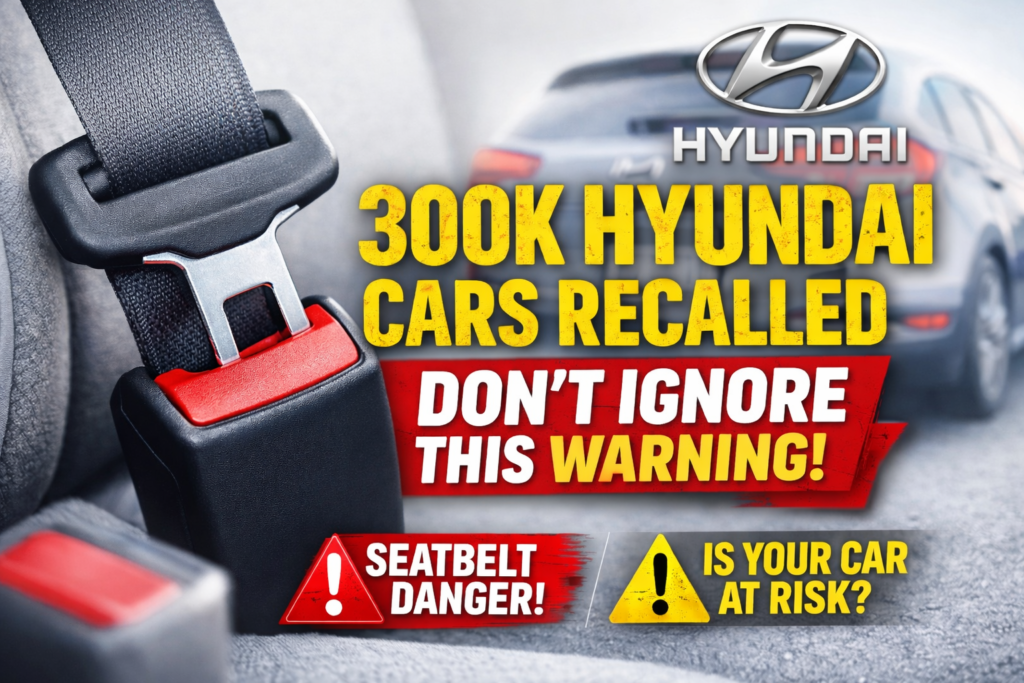
In a major safety move, Hyundai Motor Company has announced a recall of nearly 300,000 vehicles due to a potential seatbelt-related defect.
Vehicle safety remains a top priority in the automotive industry, and this recall highlights how even small component issues can have serious consequences if not addressed in time.
Key Highlights
- Hyundai Motor Company recalls nearly 300,000 vehicles due to a seatbelt defect
- The issue may affect seatbelt pretensioners during a crash
- Fault could increase the risk of injury to passengers
- Recall impacts multiple Hyundai models across different markets
- Company will inspect and repair affected vehicles free of cost
What Is the Seatbelt Issue
Problem with Pretensioners
The recall is linked to a fault in the seatbelt pretensioner system, a critical safety feature designed to tighten the seatbelt instantly during a collision.
Potential Risk
In affected vehicles, the pretensioner may malfunction or deploy improperly, which could:
- Reduce the effectiveness of the seatbelt
- Increase the risk of injury in an accident
- In rare cases, cause additional safety concerns during deployment
Affected Models and Markets
Multiple Vehicles Impacted
The recall covers a wide range of Hyundai vehicles, although exact models may vary depending on the market. Popular models like sedans and SUVs are included in the recall list.
Global Impact
This recall is not limited to one country. It affects vehicles sold in multiple global markets, showing the scale of Hyundai’s safety response.
Why This Recall Matters
Importance of Seatbelt Safety
Seatbelts are one of the most important safety features in any vehicle. Even a minor defect can compromise passenger protection during accidents.
Preventive Action by Hyundai
The recall demonstrates Hyundai’s effort to address the issue proactively before it leads to serious incidents.
What Hyundai Will Do
Free Inspection and Repair
Hyundai will:
- Inspect the seatbelt system in affected vehicles
- Replace faulty components if necessary
- Provide all repairs free of charge
Owner Notification
Vehicle owners will be notified through official communication channels, including email, SMS, or dealership contact.
What Owners Should Do
Check Your Vehicle Status
Owners should:
- Visit the official Hyundai website or contact their nearest dealership
- Check if their vehicle is part of the recall using the VIN number
Schedule a Service Appointment
If the vehicle is affected, it is important to schedule a service appointment as soon as possible to ensure safety.
Impact on Hyundai’s Brand Image
Short-Term Concern
Recalls can create temporary concerns among customers, especially when related to safety systems.
Long-Term Trust
However, taking quick action helps maintain customer trust and brand credibility, which is crucial in the competitive automotive market.
Conclusion
The recall of nearly 300,000 vehicles by **Hyundai Motor Company highlights the importance of safety in modern vehicles. While the seatbelt issue is a serious concern, Hyundai’s proactive approach to fixing the problem ensures that customer safety remains a priority. Vehicle owners are strongly advised to check their cars and complete the necessary repairs without delay.
Frequently Asked Questions
also read= BYD’s Electric Car With 530 HP and 0–100 km/h in 3.8 Seconds Costs R$270,000
What is the reason for the Hyundai recall
The recall is due to a fault in the seatbelt pretensioner system, which may not function properly during a crash.
How many vehicles are affected
Nearly 300,000 Hyundai vehicles are part of this recall.
Is the repair free of cost
Yes, Hyundai will inspect and repair the issue free of charge for all affected vehicles.
How can I check if my car is included
You can check by entering your vehicle’s VIN number on Hyundai’s official website or contacting a dealership.
Is it safe to drive the vehicle
While the vehicle can still be driven, it is strongly recommended to get the issue fixed as soon as possible to ensure maximum safety.